
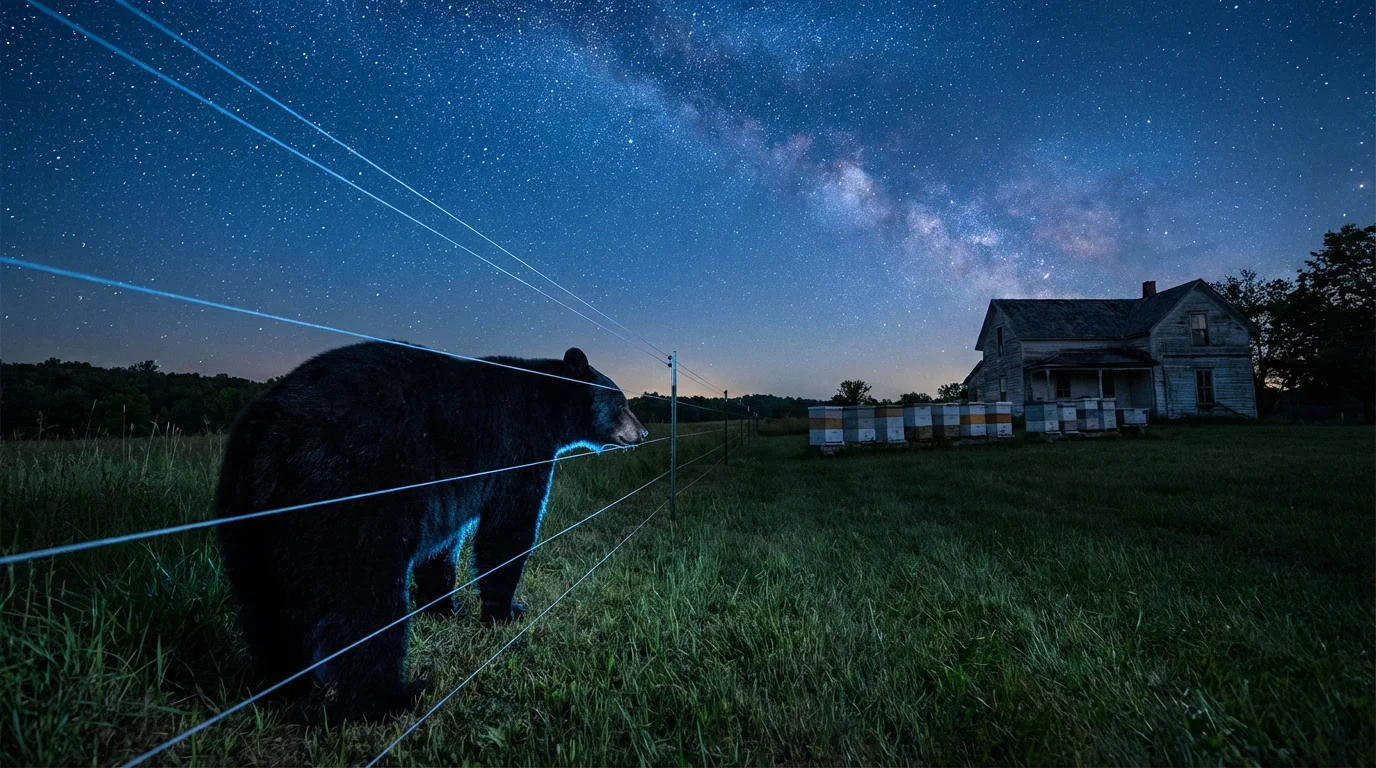
Protecting Your Property: The Ultimate 2026 Guide to Bear-Proof Electric Fencing
"When it comes to bears, a 'tickle' won't do. You need a deterrent they will remember."
As bear populations expand and human-wildlife encounters become more frequent, protecting your livestock, beehives, and fruit trees has never been more critical. In 2026, experts agree: standard garden-variety electric fences are not enough.
Bears are incredibly resilient. With thick fur and a determined appetite, they can easily push through low-output systems. To keep them out, you need a professional-grade setup that focuses on Energy (Joules) and Voltage (KV).
1. The Golden Rule: Stored Energy is Everything
If you take away one thing from this guide, let it be this: Joules matter more than Miles. While many energizers are rated by how many miles they cover, a bear-proof fence requires high stored energy.
For large predators like black bears and grizzlies, a minimum of 6 to 9 Joules is highly recommended. Why? Because a bear’s thick coat acts as an insulator. You need enough energy to "push" the shock through the fur to the skin.
The Professional Choice: The XSD-A740 9J Energizer is specifically designed for this level of deterrence. Its 9-Joule output ensures that a bear's first encounter with your perimeter is its last.
2. Correct Wire Placement: Think Like a Bear
Bears will try to go under, through, or over your fence. A single wire is a gateway, not a barrier. For a predator-proof setup, we recommend a 5 to 7-strand configuration:
- The "Nose" Wire: Place your first wire roughly 8-10 inches (20-25cm) off the ground. Bears typically lead with their nose when investigating; a shock here is the most effective psychological deterrent.
- Spacing: Wires should be spaced roughly 8-10 inches apart to prevent the bear from squeezing between them without making contact.
- Height: Your top wire should be at least 42-48 inches high to prevent easy leaping.
3. The Importance of Grounding in Dry Soil
Bears often move during the dry months when they are searching for food. In dry soil, standard grounding fails because the earth doesn't conduct electricity well.
Solution: Use a "Hot-Ground" system (also known as Ground-Return). Connect every second wire directly to the ground terminal of your energizer. When the bear touches both a hot and a ground wire simultaneously, they receive the full 9J pulse regardless of the soil condition.
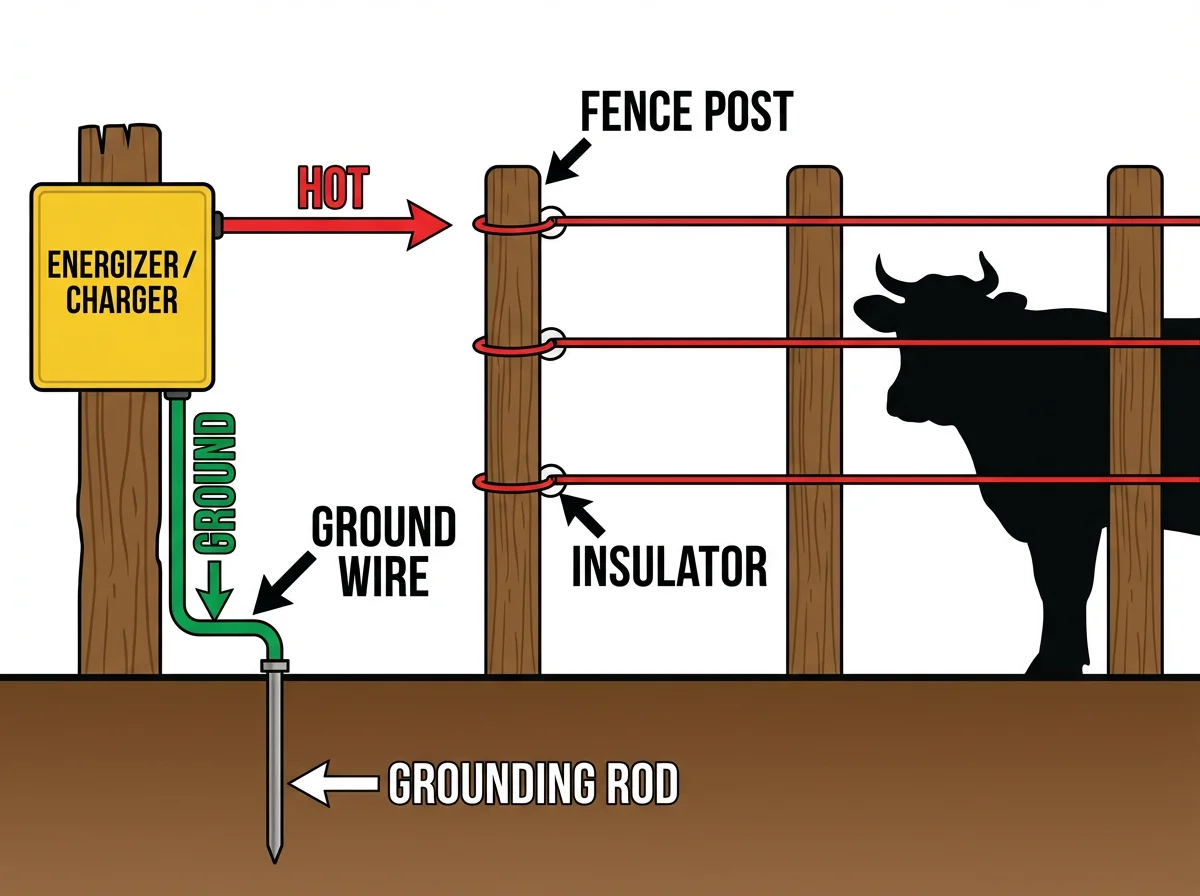
Proper grounding ensures the circuit completes through the predator.
4. Real-Time Monitoring: Don't Guess, Know.
A bear-proof fence that isn't working is just a decoration. High-joule units like the A740 feature LCD screens that show you exactly how much voltage is hitting the line.
In a bear-prone area, your LCD should ideally read 8.0KV to 11.0KV. If you see a sudden drop, it’s likely that a bear has tested the line and caused a short, or vegetation is bleeding power. The integrated alarm system on the A740 will notify you with a loud siren the moment the fence is contacted—giving you time to react.
Be Proactive, Not Reactive
Don't wait until you find a destroyed beehive or a lost calf to upgrade your security. In 2026, the technology exists to make your property a "no-go zone" for predators.
Ready to Secure Your Perimeter?
Get the power required for serious predator deterrence.
Shop XSD-A740 (9J Power)LIFEALL — Professional Predator Protection for Farmers and Ranchers.